Good days start with a barn round.
Practical care guides, printable logs and a little more order for life with chickens, goats, horses, sheep and cattle.
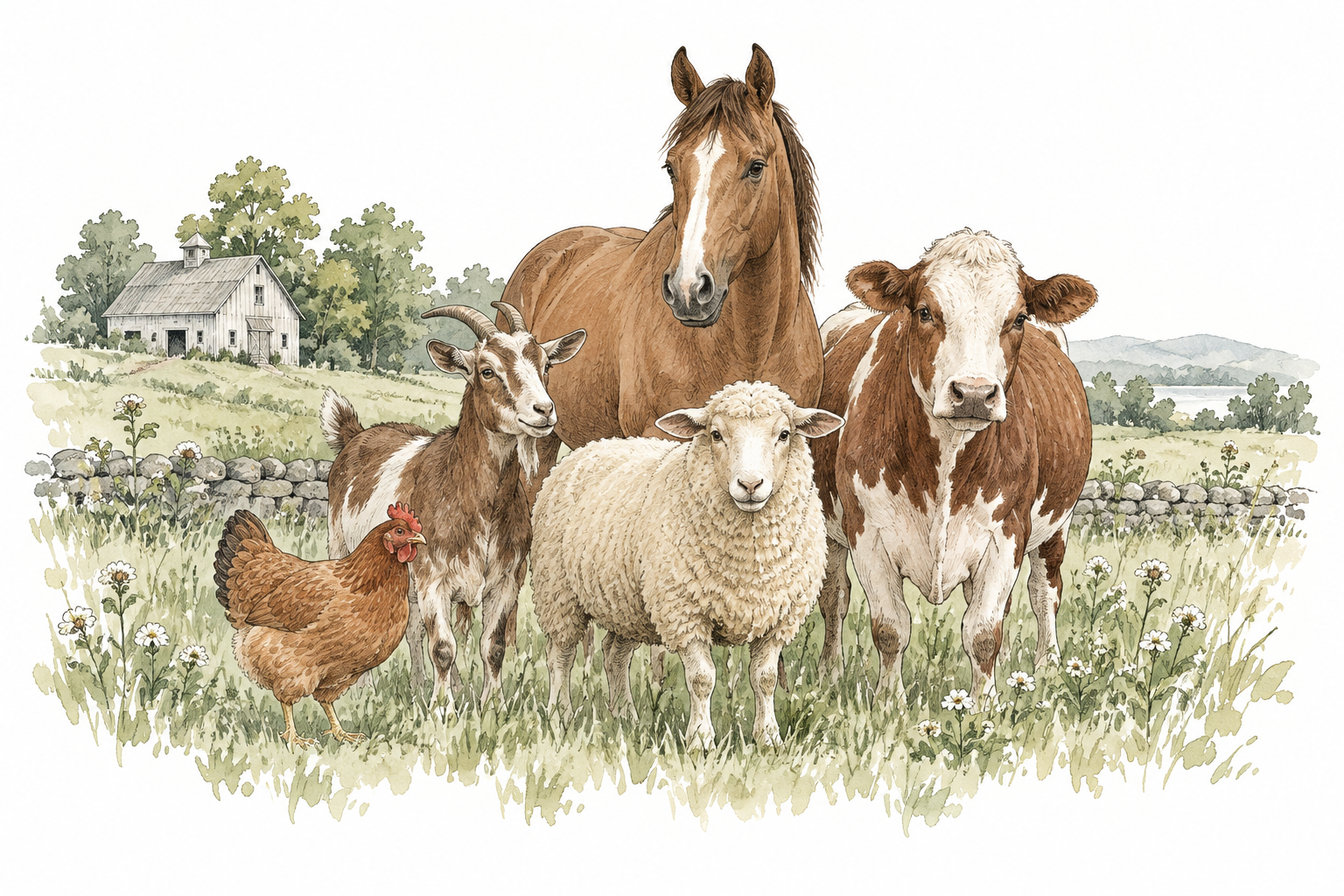
AI-generated editorial illustration. Not an animal-care demonstration.
What you can do in PawLine
Keep the guide here. Take your animal profiles, notes and reminders with you in the app.
Animal profiles
Keep breed, age, weight, health conditions and photos for each animal.
Daily health notes
Record symptoms, behavior and observations. The iOS listing also describes emailing health records to your veterinarian.
Medication reminders
Set schedules, receive push reminders and track dosing history for your veterinarian-directed plan.
24/7 AI guidance
Ask about animal health, diet and behavior. PawLine draws answers from published animal-health research, including sources like PubMed. AI guidance is information, not a diagnosis or a replacement for your veterinarian.
Nearby veterinary clinics
The website and iOS listing describe help finding nearby vets. Confirm availability and livestock services with the clinic.
Livestock support
The iOS listing names cows, horses, sheep, goats and chickens alongside household pets.
Features described by PawLine and its iOS listing, checked October 19, 2026. Android's description is less detailed; check your platform before subscribing. Research-source and no-payment-info wording was confirmed by the app owner. Features are product claims, not independent testing.
A useful habit, not another dashboard
Learn what normal looks like. Notice the change.
Put a date, an animal and a next step beside it.
Call the vet when needed. Keep the care plan close.
The field-guide library
No chat box. No mystery answers. Just readable guides with sources, checklists you can use and records you can print.
A daily rhythm for backyard chickens
Refresh feed and water, observe the flock, collect eggs and secure the coop at dusk. A repeatable routine makes changes easier to notice.
Read the guide ↗Chickens / Weekly careA cleaner coop, without a complicated system
Separate daily water care from weekly coop cleaning, and keep outside footwear apart from poultry-area gear.
Read the guide ↗Goats / A practical starting pointGoat care starts with water, feed and fences
Keep fresh water available, use feeders, choose species-appropriate minerals and plan secure fencing before goats arrive.
Read the guide ↗Sheep / Daily access and long-term planningA small-flock sheep care checklist
Check water, feeders, sheep-appropriate minerals and fencing, then use records and your veterinarian to guide health management.
Read the guide ↗Horses / Water, forage and observationThe horse-care round that catches changes
Check water access, notice changes in eating and manure, and make a clear note of anything unusual before leaving the barn.
Read the guide ↗Horses / Cold-weather preparationBefore the freeze: a horse winter checklist
Plan reliable water, shelter, ventilation and safe access before cold weather. Snow is not a substitute for drinking water.
Read the guide ↗Cattle / Before the hot spellA cattle heat-day readiness check
Prioritize clean water, shade and airflow. Watch breathing changes and seek veterinary help for distress.
Read the guide ↗All animals / A planning frameworkA seasonal barn calendar you can adapt
Use seasonal reviews for water, shelter, forage and biosecurity. Keep medical dates in a separate veterinarian-approved plan.
Read the guide ↗All animals / Observation is not diagnosisWhen a checklist should become a vet call
For distress or a serious change, contact a veterinarian. Do not wait for a checklist, website or AI response to decide an urgent next step.
Read the guide ↗All animals / The threshold mattersA barn-entry routine visitors can follow
Make the clean and dirty boundary clear, supply barn-specific footwear and explain the routine to every visitor, even for a short visit.
Read the guide ↗Printable / Print, write, repeatA daily animal observation log
Record the animal, date, what changed and what happened next. Write observations rather than a guessed diagnosis.
Read the guide ↗Printable / A record, not a prescriptionA medication record for your vet-directed plan
Copy your veterinarian's medication instructions, then record what was actually administered and when.
Read the guide ↗A quick-reference barn round
Chickens
Daily feed and fresh water; collect eggs; count and secure at dusk.
Goats & sheep
Check clean water, feeder access, species-appropriate minerals and gates.
Horses
Check flowing water, eating and manure changes; remove wet bedding.
Cattle in heat
Check water capacity, shade, airflow and breathing changes.
Summary of the linked Extension guides. Not a complete care or emergency checklist.
Where the guidance comes from
Written from university Extension guidance, with original checklists and blank record templates. No veterinarian review is claimed. These guides have not been reviewed by a veterinarian.
Read our sources ↗